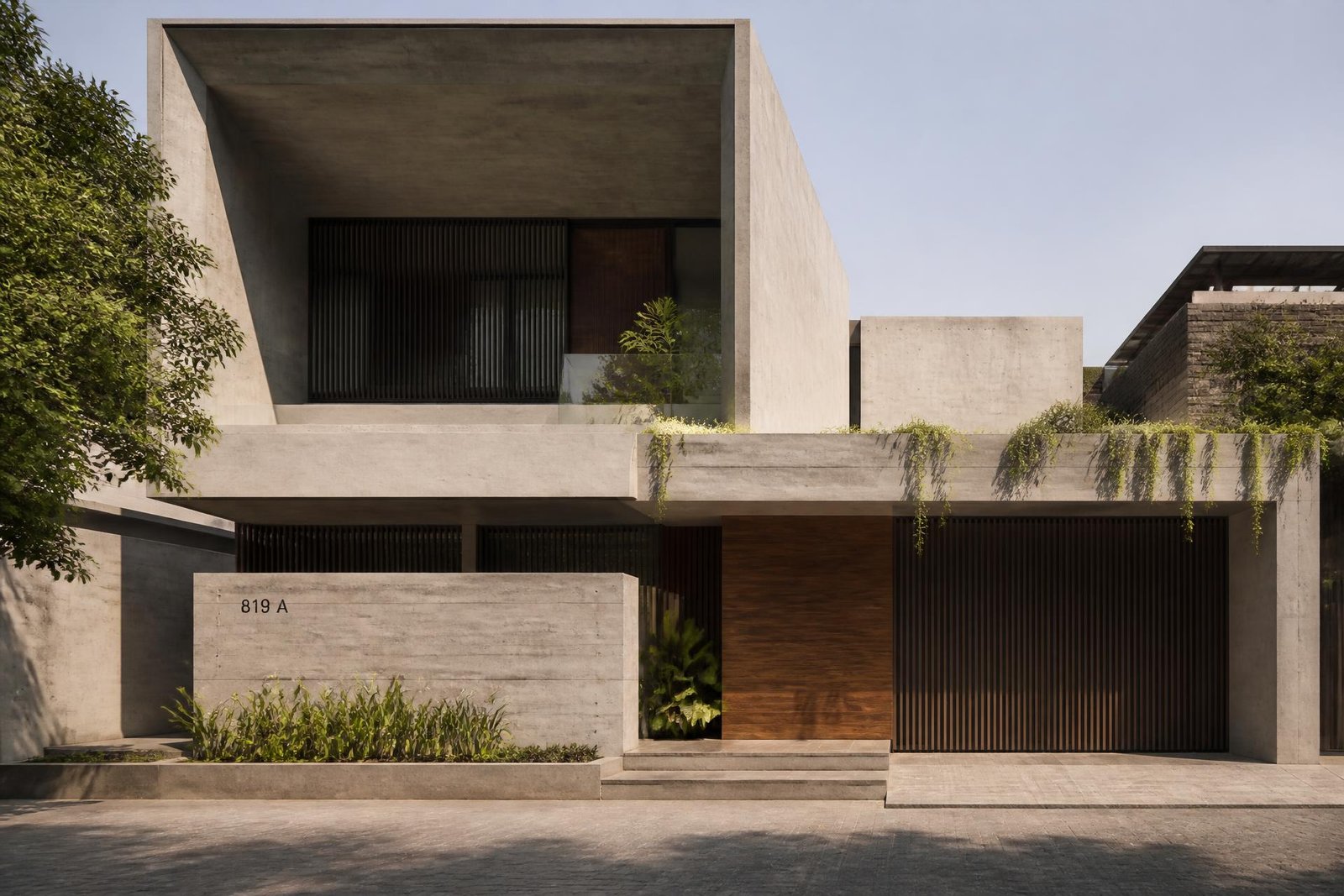
Expertise across scales and typologies.
Architecture · Engineering · Project Management · Construction · Approvals · Cost Management
Explore industries01 — Industry Expertise
Different sectors.
Different demands.
Every project type carries its own operational, technical, statutory, commercial and human requirements.
Dharma applies an integrated design-and-delivery approach across a broad range of development sectors, bringing architecture, engineering, project management, approvals, costing and construction thinking together from the earliest project decisions.
02 — Industries
Where we work.
Select an industry to explore its design priorities, delivery challenges and the disciplines typically involved.
Residential
Residential projects require a careful balance between everyday usability, privacy, climate response, structural logic, approvals, cost and long-term adaptability. Dharma approaches homes and residential developments as coordinated environments, integrating planning, architecture, interiors, engineering and execution so that spatial quality and technical decisions reinforce each other.
Commercial
Commercial developments must perform operationally and commercially while creating a clear architectural identity. Dharma coordinates planning efficiency, circulation, services, structure, façade, statutory requirements, cost planning and construction strategy to create buildings that support business needs, leasing flexibility, user experience and durable asset value.
Industrial
Industrial projects are driven by process, movement, safety, structural spans, utilities, future expansion and construction practicality. Dharma works to align architectural planning with production requirements, engineering coordination, statutory submissions, access, material handling and execution sequencing so the built environment supports efficient operations rather than working against them.
Hospitality
Hospitality design depends on the relationship between guest experience and back-of-house performance. Dharma coordinates architecture, interiors, circulation, service planning, material decisions, engineering interfaces and construction detailing to support spaces that feel considered to guests while remaining efficient, maintainable and operationally coherent for staff.
Healthcare
Healthcare environments require disciplined planning around patient movement, staff workflows, hygiene, accessibility, building services, emergency response and technical coordination. Dharma structures the design process around operational clarity and human experience, bringing architectural planning together with engineering, approvals, cost and construction coordination from an early stage.
Educational
Educational buildings must support learning, movement, supervision, collaboration and changing teaching models over time. Dharma considers classrooms, shared spaces, circulation, outdoor environments, services, safety and statutory requirements as one connected system, creating campuses and institutions that remain functional, legible and adaptable as needs evolve.
Government
Government and public-sector developments demand clarity of scope, documentation, compliance, coordination and responsible use of resources. Dharma’s multidisciplinary model supports projects through planning, design, engineering interfaces, estimation, tender-related coordination, execution monitoring and documentation, with an emphasis on transparent processes and durable public value.
Infrastructure
Infrastructure-led projects depend on coordination across land, circulation, utilities, engineering systems, phasing and statutory interfaces. Dharma contributes a planning and multidisciplinary coordination perspective that helps connect technical requirements with user movement, development strategy, construction practicality and the broader context in which infrastructure must operate.
Mixed-Use
Mixed-use developments bring different programmes, users, access patterns, services and commercial objectives into one coordinated environment. Dharma focuses on resolving these interfaces early—organising movement, shared infrastructure, parking, service zones, public realm, structural planning and phasing so multiple uses can coexist without compromising clarity or performance.
Townships
Township planning requires decisions at several scales simultaneously: land use, plot strategy, circulation, open space, infrastructure, amenities, development controls and phasing. Dharma approaches township projects as coordinated frameworks, aligning planning intelligence with engineering, approvals and long-term development logic to create coherent and adaptable communities.
Corporate
Corporate environments must support productivity, collaboration, identity, technology and changing patterns of work. Dharma integrates workplace planning, architecture, interiors, services coordination, material strategy, cost and execution so offices operate efficiently while presenting a coherent physical expression of the organisation occupying them.
Retail
Retail spaces must make movement intuitive, merchandise visible, brand expression clear and execution precise. Dharma coordinates spatial planning, storefronts, interiors, lighting interfaces, services, materials, BOQ considerations and site execution so the customer experience and operational requirements are resolved as part of one design strategy.
03 — Integrated Delivery
Sector knowledge is stronger
when disciplines connect.
For each industry, the balance of services changes. The principle does not: decisions should be coordinated across the project lifecycle rather than made in isolation.
04 — Start a Project
Have a development
to move forward?
Tell us the project type, location, current stage and the disciplines you need. We’ll begin with the project context and build the right scope around it.
START A CONVERSATION ↗